The model writes code, declares success, and leaves the silent failures for you.
A build loop that checks what it shipped against what it promised.
Assess, plan, execute, review, iterate, learn — one command turns a multi-file change into a checked, repeatable workflow, and stops when the diff drifts from the plan.
claude plugin install build-loop@rosslabs-ai-toolkit Claude Code plugin · one command · picks its own model per task
$ /build-loop:run add rate limiting to the /api/send route
● Phase 1 — Assess
  project: astro · plugins: 6 · prior runs: 12
  goal: 429 on >5/min · criteria: tests green, no regressions
● Phase 2 — Plan   plan-verify ✓  plan-critic ✓   (3 chunks)
● Phase 3 — Execute   middleware ✓  route ✓  tests ✓
● Phase 4 — Review   critic ✓  validate ✓ (14 passed)  fact-check ✓
● Phase 6 — Learn   rate-limit pattern recurring → drafted skill
✓ Done — committed a1b9f2cYou never pick a mode
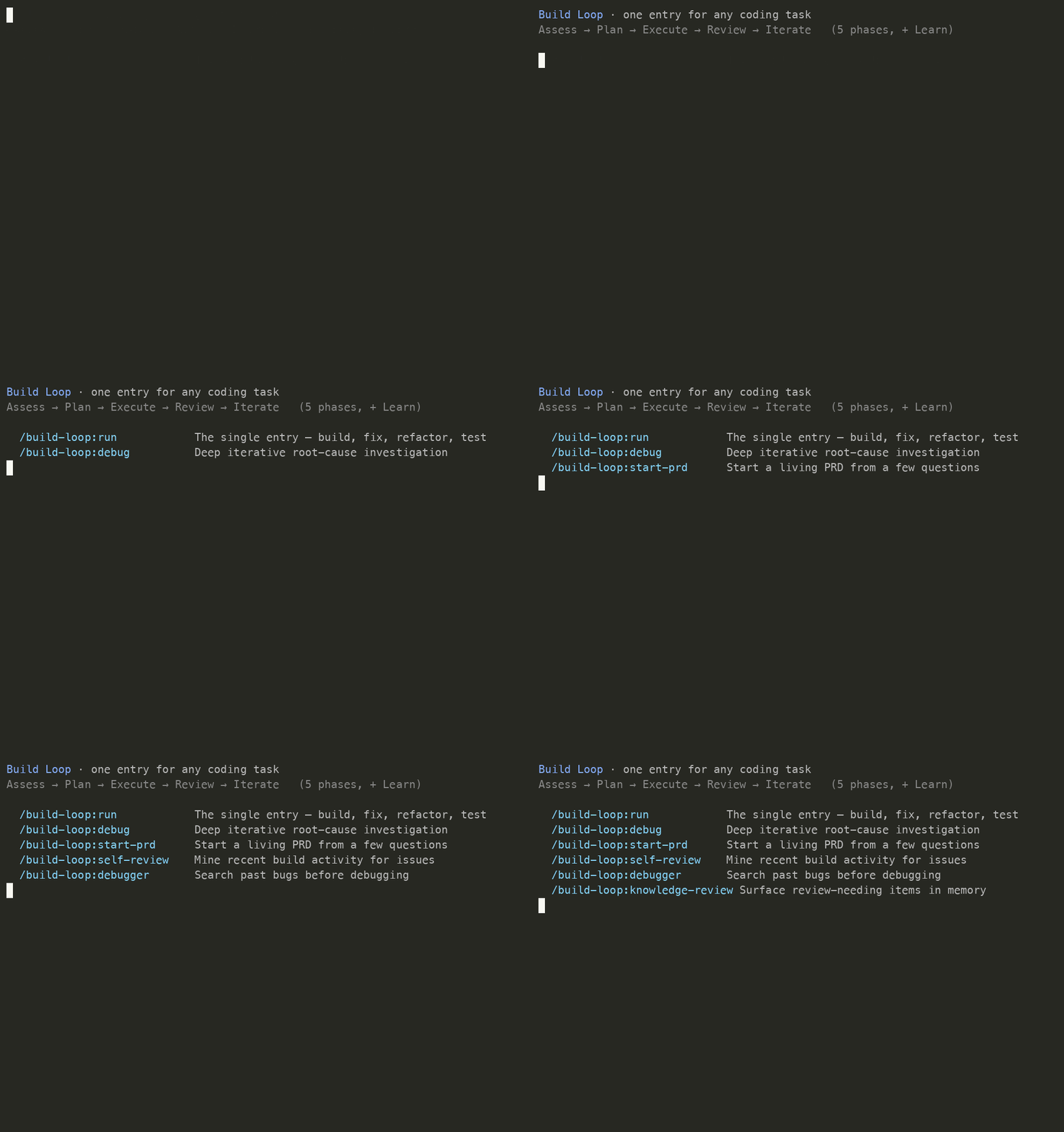
`/build-loop:run` takes any request in plain language — build, fix, refactor, optimize, research, test — and the orchestrator classifies intent and routes it. No flags, no modes to learn.
The plan names the design decisions up front
A deterministic plan-verify lint (delete-with-callers, numeric-drift, route-change evidence) plus a plan-critic pass run before any build work starts. The implementer then reports which decisions it made, and a lint compares the claim to the diff.
Passing tests don't mean the page renders
Review runs critic → validate → fact-check → simplify as ordered sub-steps. Every number on the page traces back to a real source; UI work needs live evidence, not just a green suite. The build stops if what shipped doesn't match what was promised.
Repetition becomes a drafted skill
Phase 6 detects patterns recurring across builds and auto-drafts experimental skills and agents with A/B tracking. Promotion to active still needs your explicit sign-off — the loop proposes, you decide.
- Refuses third-party JS deps until the version is 7+ days old (npm smash-and-grab guard)
- Never sets an agent as the git author — authorship stays human
- Production deploys and protected-branch pushes require your explicit confirmation
Do I have to learn a bunch of commands?
No — `/build-loop:run` is the only human-facing command. Describe the task in plain language and the orchestrator routes to the right internal mode.
How does it pick which model to use?
A strong model plans and reviews, a faster model writes code, a small model runs pattern checks. Plans with five or more synthesis dimensions auto-route to the strong model in one pass.
Does it work outside Claude Code?
The method is host-neutral. Claude Code gets slash commands, agents, and hooks; Codex and other tools follow the same phase structure through a plain AGENTS.md contract.
What stops it from running away on a change?
Iterate caps, a plan-to-diff attestation lint, an independent commit auditor, and a deployment policy that holds production actions for confirmation.
Multi-step builds drift. I’d watch the model write code, declare success, and move on — leaving placeholder data that looked real, a test stub that never ran, a page that didn’t render, or scope that had crept well past what I asked for. The failures were quiet, and I only found them later.
Build Loop is the guardrail I wanted around my own agent: name the goal and the design decisions up front, build in checked chunks, and refuse to call it done until what shipped matches what was promised. It picks the right model for each step, catches the cheap mistakes before the expensive ones, and holds anything irreversible for me to confirm.
claude plugin install build-loop@rosslabs-ai-toolkit Claude Code plugin · one command · picks its own model per task